measuring AEO

Where does your company stand in AI search?

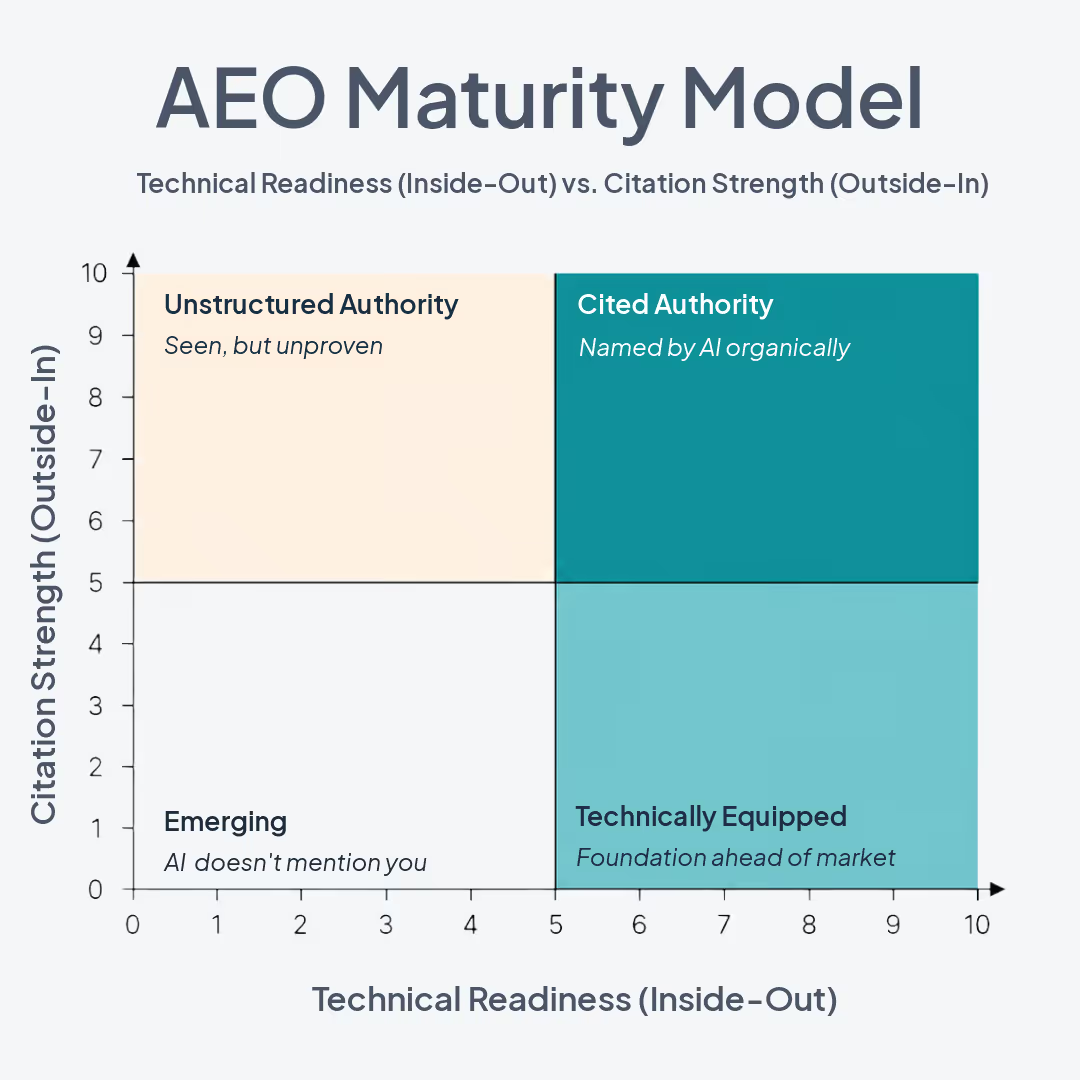
AEO Maturity Model showing four quadrants: Emerging, Technically Equipped, Unstructured Authority, and Cited Authority, plotting Technical Readiness against Citation Strength with customer example overlay

Somewhere right now, a buyer is asking an AI platform which vendor to trust in your category. This framework tracks two dimensions, technical readiness and citation strength. The work is closing the distance on both.

How the model works

Technical readiness (inside-out)

Technical Readiness (Inside-Out)

This is the axis a company controls directly. It measures whether your website gives AI systems what they need to read, trust, and accurately represent your business: the structure of your content, the clarity of your metadata, the quality of your schema, and whether the entity you're describing comes through unambiguously to a model parsing your pages cold.

We built a repeatable audit methodology: run it twice against an unchanged site and you'll get the same score both times.

There's nothing probabilistic or subjective about it, no rater's opinion, no day-to-day variance.

That objectivity is what makes this a reliable foundation. You can see exactly where the gaps are, address them in a logical order, and measure what changed. For most companies, this is also where the fastest early progress lives, because the work is concrete and the feedback is immediate.

What it measures
  • Crawlability and indexability
  • Metadata quality and specificity
  • Heading and semantic structure
  • Schema presence and relevance
  • Entity clarity (company, product, audience, problem)
  • Answer-oriented content structure
  • Evidence and trust signals
  • Internal linking and topical depth
  • Page completeness

What it measures

  • Vendor mentions across major AI platforms
  • Source citation rate (your content used to construct answers)
  • Secret shopper quality (accuracy, specificity, buy recommendation)
  • Answer type distribution
  • Entity clarity (company, product, audience, problem)
  • Earned editorial coverage
  • LinkedIn citation rate

Citation strength (outside-in)

This axis measures what the market has decided about you. Not what your website says, but what AI platforms actually do when a real buyer asks a real question in your category. Whether your company gets named, whether your content gets used as a source, whether the answer a buyer receives is accurate, specific, and favorable.

That is citation strength, and unlike technical readiness, you cannot simply fix it on a Tuesday and measure it on a Wednesday.

The outside-in score is probabilistic by nature. It lags behind your technical work by weeks to months, and it cannot be built until your messaging is clear enough to define what you should be known for. Once the foundation is in place, citation strength compounds in ways technical readiness alone never does. It is the axis that buyers actually experience.

INSIDE THE QUADRANTS

Not every company starts this journey from the same place, and where you begin shapes what you do first. Every position below has a clear path forward.

Unstructured authority

AI platforms know your name, but the foundation holding that recognition together is fragile.

Key signals

  • Your company appears in AI answers, sometimes prominently
  • Those appearances are inconsistent, occasionally inaccurate, or poorly described
  • Your website has weak schema, generic metadata, or inconsistent messaging
  • You have brand recognition that predates any deliberate AEO work

What this means

This position is more precarious than it looks. Today's citations rest on legacy brand weight, not deliberate AEO work, and they erode as platforms improve and competitors build stronger foundations. The urgency is real even if current results feel fine.

Cited
authority

Both axes are strong.
The flywheel is turning.

Key signals

  • Your company appears consistently across multiple AI platforms for category queries
  • AI returns accurate, substantive evaluations when asked to assess the company directly
  • Your content is being used as a source, not just mentioned as a vendor
  • Competitors are being compared against your positioning and terminology

What this means

You may not need AEO Wrangler. You've done the foundational work and built a compounding presence that's hard to close. The work now is protection and expansion: monitor what AI platforms say about you, keep publishing original research, and watch for competitors closing the gap.

Emerging

Both axes are low. AI platforms have little to work with and little reason to cite you.

Key signals

  • Messaging is inconsistent across your website and channels
  • No structured schema on key pages
  • A direct search for your company name in AI returns thin or inaccurate results
  • No clear definition of who you serve and what problem you solve

What this means

This is the most common starting position for early-stage B2B companies, and the most fixable. Nothing is entrenched yet. The work starts with messaging clarity, the foundation everything else builds on.

Technically equipped

Your technical foundation is solid, but the market hasn't caught up yet.

Key signals

  • Schema is present and structured correctly across key pages
  • Metadata is specific and accurate
  • A direct name search in AI returns correct information
  • Category and buyer-intent queries return competitors, not you

What this means

This is the expected position three to six months into serious AEO work. Technical readiness is strong because that work was deliberate. Citation strength lags because it takes time to accumulate across platforms. The work is right. The market just hasn't caught up yet.

A real client journey

From invisible to cited

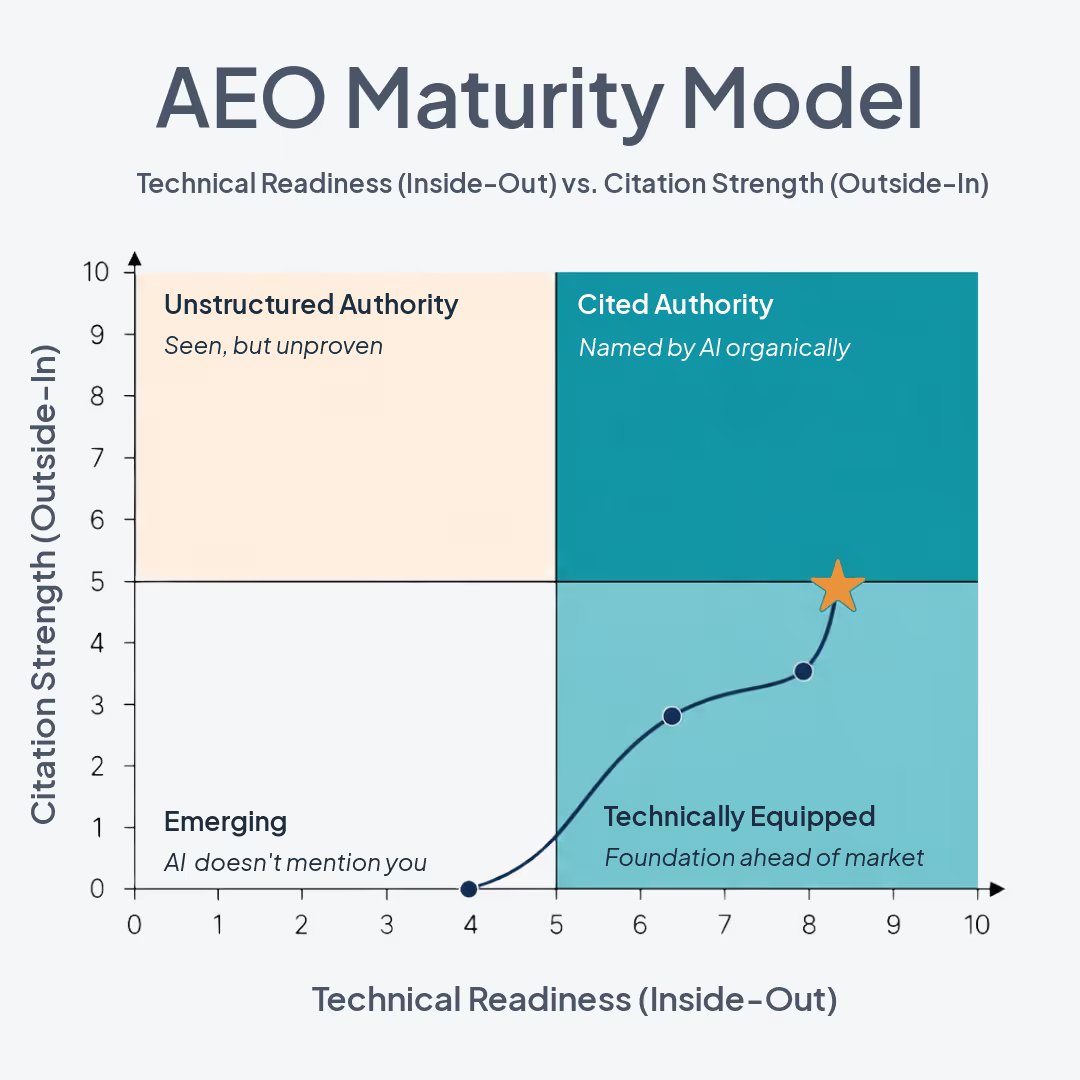
This is what AEO progression looks like in practice. A healthcare technology company came to us with no structured foundation and no AI presence. We built the technical layer first, then layered in content that drove citation strength as platforms caught up. The arc is still climbing.

At four months, the inside-out score reached 8.2 out of 10. The outside-in score reached 4.9 and is still moving. The company now appears consistently across multiple AI platforms for category queries and has been cited as the authoritative source for a key industry concept it owns. The focus now shifts to content and brand authority, earning a spot in the Cited Authority quadrant.

AEO Maturity Model showing four quadrants: Emerging, Technically Equipped, Unstructured Authority, and Cited Authority, plotting Technical Readiness against Citation Strength with customer example overlay

FAQ: Common questions about the model

Why two scores instead of one?

A single score collapses two very different things into one number and makes them impossible to act on. A company can have a technically excellent website and still be invisible in AI answers. Another can have strong brand recognition in AI responses but a technical foundation too fragile to sustain it. Two scores show you exactly where each one stands, and knowing both tells you what to fix and in what order.

Which axis should we focus on first?

It depends on where you're starting. For most B2B companies the technical foundation is underdone, and since it's the axis you control directly it's usually the right place to begin. You can audit it, fix it, and measure the result in weeks. Citation strength follows, but it cannot be built on a weak foundation, and it cannot be measured meaningfully until your messaging is clear enough to define what you should be known for. If you're already technically strong, the work shifts to content, authority signals, and giving platforms time to catch up.

How long does it take to see results?

Technical readiness moves quickly once the work is underway, typically within weeks. Citation strength is slower and platform-dependent. Perplexity, which is retrieval-native, tends to reflect new content within days to weeks. Gemini follows at one to three months. ChatGPT is more dependent on training data and can take three to six months or longer. Meaningful outside-in progress takes a quarter, and compounding authority takes longer than that.

What if our technical score is high but our citation score is low?

This is the most common pattern we see in companies three to six months into serious AEO work, and it is the expected one. It means the foundation is right and the market hasn't caught up yet. The platforms are still processing the work. The right response is to stay the course on content and authority signals, track which prompt types are producing early wins, and resist the temptation to conclude that the technical work isn't paying off. Citation strength on every platform lags behind technical readiness by design.

Does this work replace our SEO program?

The foundational work that earns AI citations turns out to be largely the same work that traditional search has always rewarded: consistent messaging, structured content, schema, named-entity authority, and earned citations. We have seen AEO-first engagements lift conventional search rankings as a direct consequence of the work, without targeting SEO separately. That said, we treat it as a benefit we're seeing rather than a guarantee we're making. If you have an existing SEO program doing good work, AEO builds on top of it. If you don't, AEO-first is a reasonable place to start.

Where do we start?

With a clear read of where you stand. The AEO Readiness Assessment gives you both scores, a plain-language interpretation of what they mean for your specific situation, and a clear view of what to address first. It's a fixed-price engagement with no obligation to continue. If the assessment shows that AEO isn't your most urgent problem right now, we'll tell you that too.

Find out which level you're at.

Get the AEO Readiness Assessment →Or learn more about what's included →